
Anterior Drawer Ankle
Anterior Drawer Ankle - Diagnosis can be made clinically with swelling and ecchymosis of the ankle and pain with range of motion. Identify ligamentous instability, optimize rehabilitation, and improve ankle function for enhanced performance and injury prevention. Web the anterior drawer test of the ankle is a common orthopedic test to assess the passive stability of the lateral ankle joint after trauma. The patient is in supine lying or sitting position with the knee in flexed position to relax the calf muscles and prevent the patient from resisting the examiner. Web anterior drawer test [4] it is used to assess the integrity of the atfl based on the anterior translation of the talus under the tibia in a sagittal plane. Web ankle sprains are very common twisting injuries to the ankle that are the most common reason for missed athletic participation. In particular, it prevents the talus bone from moving too far forward. Web the anterior drawer test checks the health of the anterior talofibular ligament (atfl), a key ligament that helps keep the ankle joint stable. You’ll lie on your back and your provider will move your lower leg to check how far your knee. It is important to compare one side with the other. Web ankle sprains are very common twisting injuries to the ankle that are the most common reason for missed athletic participation. Web landeros et al 6 provided more detail, but a contrasting approach, writing that the anterior drawer sign “must be tested for with the knee flexed and the ankle held at a right ankle. Web the anterior drawer test is a set of knee and lower leg movements healthcare providers use to diagnose acl tears. Diagnosis can be made clinically with swelling and ecchymosis of the ankle and pain with range of motion. This is a provocative test done to check for the integrity of the atfl. In particular, it prevents the talus bone from moving too far forward. With plantar flexion of the ankle, a positive anterior drawer sign usually becomes negative.” (p1028) Web assess ankle stability with the anterior drawer of the ankle test. Place the heel in the palm, and allow the bottom of the foot to rest on your forearm. Identify ligamentous instability, optimize rehabilitation, and improve ankle function for enhanced performance and injury prevention. In particular, it prevents the talus bone from moving too far forward. Web the anterior drawer test checks the health of the anterior talofibular ligament (atfl), a key ligament that helps keep the ankle joint stable. Web ankle sprains are very common twisting injuries to the ankle that are the most common reason for missed athletic participation. With plantar flexion. Web the anterior drawer test checks the health of the anterior talofibular ligament (atfl), a key ligament that helps keep the ankle joint stable. This is a provocative test done to check for the integrity of the atfl. One hand holds the leg down, while the other hand pulls the foot upwards and anteriorly. Web anterior drawer has sensitivity of. Web anterior drawer has sensitivity of 86 percent and specificity of 74 percent for a diagnostic test of 160 patients with an inversion ankle sprain when compared to an arthrogram. The patient is in supine lying or sitting position with the knee in flexed position to relax the calf muscles and prevent the patient from resisting the examiner. Diagnosis can. One hand holds the leg down, while the other hand pulls the foot upwards and anteriorly. Web landeros et al 6 provided more detail, but a contrasting approach, writing that the anterior drawer sign “must be tested for with the knee flexed and the ankle held at a right ankle. Web assess ankle stability with the anterior drawer of the. In particular, it prevents the talus bone from moving too far forward. Web anterior drawer has sensitivity of 86 percent and specificity of 74 percent for a diagnostic test of 160 patients with an inversion ankle sprain when compared to an arthrogram. With plantar flexion of the ankle, a positive anterior drawer sign usually becomes negative.” (p1028) Web the anterior. Web ankle sprains are very common twisting injuries to the ankle that are the most common reason for missed athletic participation. Web assess ankle stability with the anterior drawer of the ankle test. This is a provocative test done to check for the integrity of the atfl. One hand holds the leg down, while the other hand pulls the foot. Web the anterior drawer test checks the health of the anterior talofibular ligament (atfl), a key ligament that helps keep the ankle joint stable. Diagnosis can be made clinically with swelling and ecchymosis of the ankle and pain with range of motion. Web anterior drawer test [4] it is used to assess the integrity of the atfl based on the. Web the anterior drawer test of the ankle is a common orthopedic test to assess the passive stability of the lateral ankle joint after trauma. Web ankle sprains are very common twisting injuries to the ankle that are the most common reason for missed athletic participation. Place the heel in the palm, and allow the bottom of the foot to. This is a provocative test done to check for the integrity of the atfl. Web the anterior drawer test checks the health of the anterior talofibular ligament (atfl), a key ligament that helps keep the ankle joint stable. One hand holds the leg down, while the other hand pulls the foot upwards and anteriorly. Diagnosis can be made clinically with. One hand holds the leg down, while the other hand pulls the foot upwards and anteriorly. Web ankle sprains are very common twisting injuries to the ankle that are the most common reason for missed athletic participation. Web assess ankle stability with the anterior drawer of the ankle test. It is important to compare one side with the other. The. In particular, it prevents the talus bone from moving too far forward. Place the heel in the palm, and allow the bottom of the foot to rest on your forearm. The patient is in supine lying or sitting position with the knee in flexed position to relax the calf muscles and prevent the patient from resisting the examiner. Web assess ankle stability with the anterior drawer of the ankle test. Web anterior drawer test [4] it is used to assess the integrity of the atfl based on the anterior translation of the talus under the tibia in a sagittal plane. Web ankle sprains are very common twisting injuries to the ankle that are the most common reason for missed athletic participation. Web the anterior drawer test checks the health of the anterior talofibular ligament (atfl), a key ligament that helps keep the ankle joint stable. It is important to compare one side with the other. Web the anterior drawer test of the ankle is a common orthopedic test to assess the passive stability of the lateral ankle joint after trauma. Web anterior drawer has sensitivity of 86 percent and specificity of 74 percent for a diagnostic test of 160 patients with an inversion ankle sprain when compared to an arthrogram. Identify ligamentous instability, optimize rehabilitation, and improve ankle function for enhanced performance and injury prevention. Diagnosis can be made clinically with swelling and ecchymosis of the ankle and pain with range of motion. This is a provocative test done to check for the integrity of the atfl. Web the anterior drawer test is a set of knee and lower leg movements healthcare providers use to diagnose acl tears.
Ankle Joint Anterior Drawer Test YouTube

Anterior Drawer Test of the Ankle YouTube
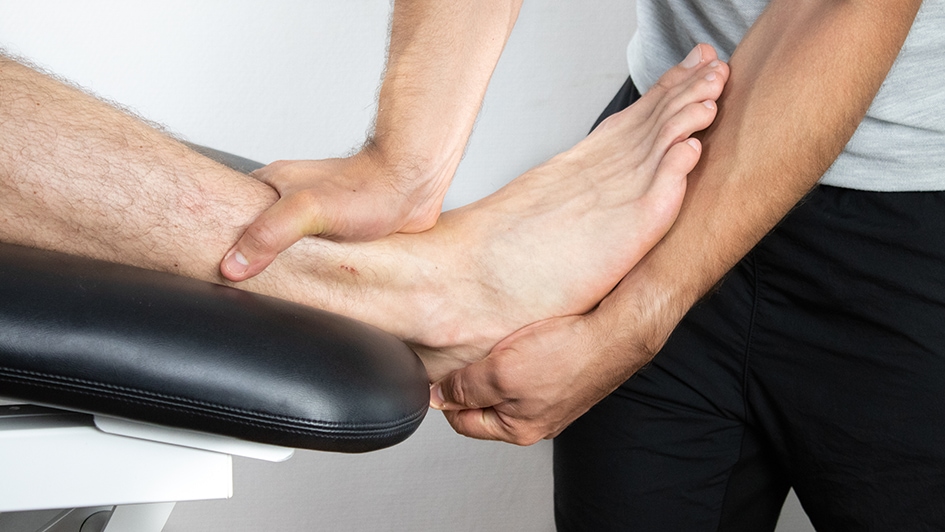
Anterior Drawer Test of the Ankle Inversion Trauma Lateral Ankle Sprain

Anterior drawer test for the ankle YouTube
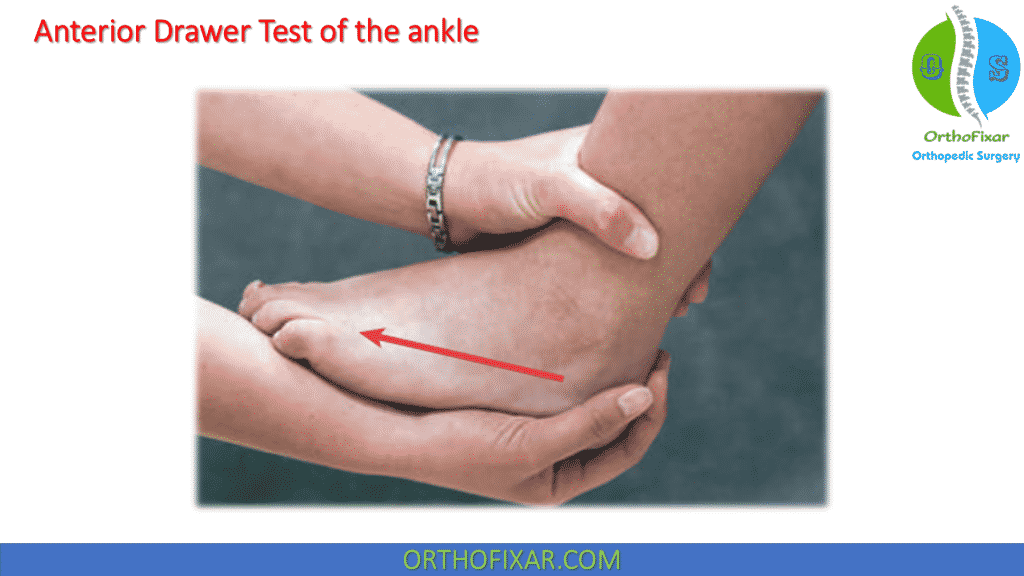
Anterior Drawer Test Of The Ankle

Anterior Drawer Test For Ankle Sprain Jas fur Kid

Anterior Drawer Test of Ankle YouTube

Foot & Ankle Anterior Drawer Test (APPA) YouTube

Anterior Drawer Ankle (ATFL) YouTube
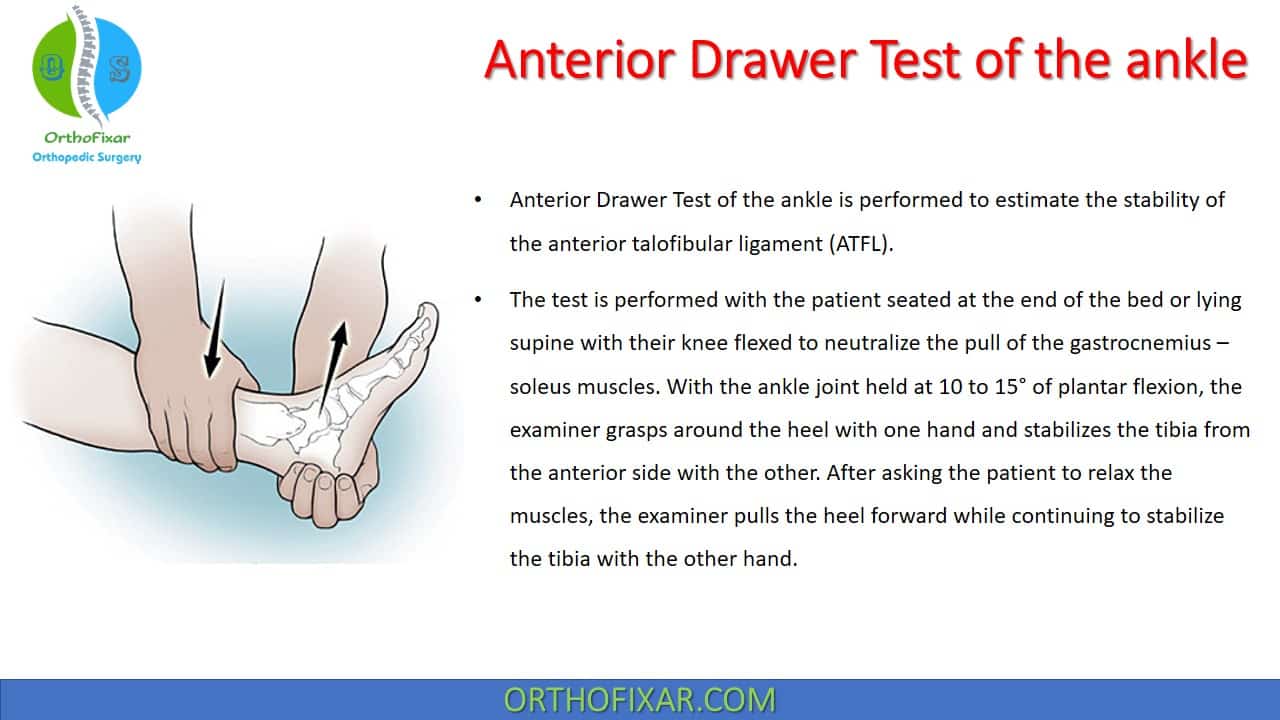
Anterior Drawer Test Of The Ankle
One Hand Holds The Leg Down, While The Other Hand Pulls The Foot Upwards And Anteriorly.
Web Landeros Et Al 6 Provided More Detail, But A Contrasting Approach, Writing That The Anterior Drawer Sign “Must Be Tested For With The Knee Flexed And The Ankle Held At A Right Ankle.
You’ll Lie On Your Back And Your Provider Will Move Your Lower Leg To Check How Far Your Knee.
With Plantar Flexion Of The Ankle, A Positive Anterior Drawer Sign Usually Becomes Negative.” (P1028)
Related Post: